Welcome to Tumblebug Press

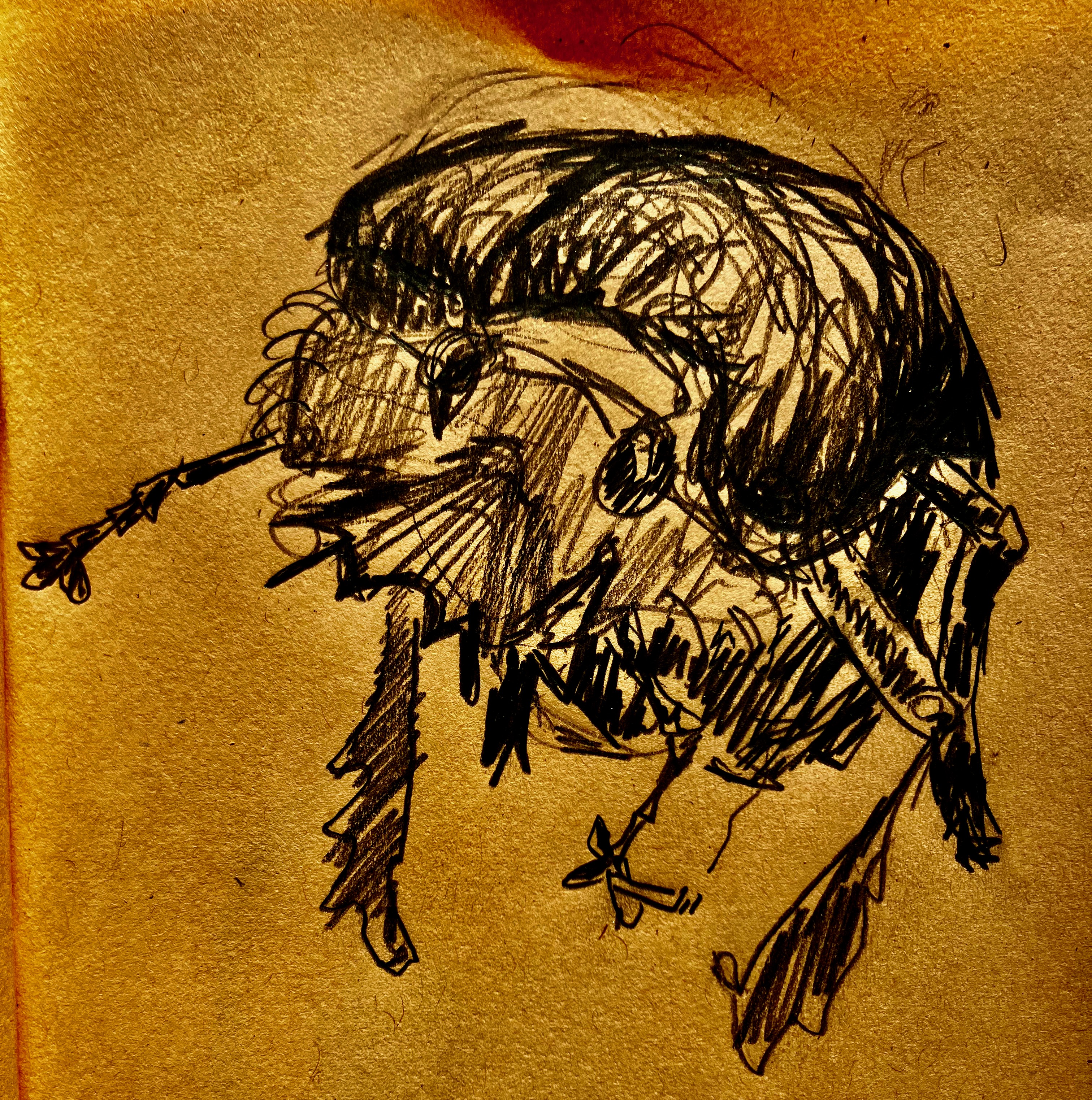
Self-portrait by Tumblebug, 2022

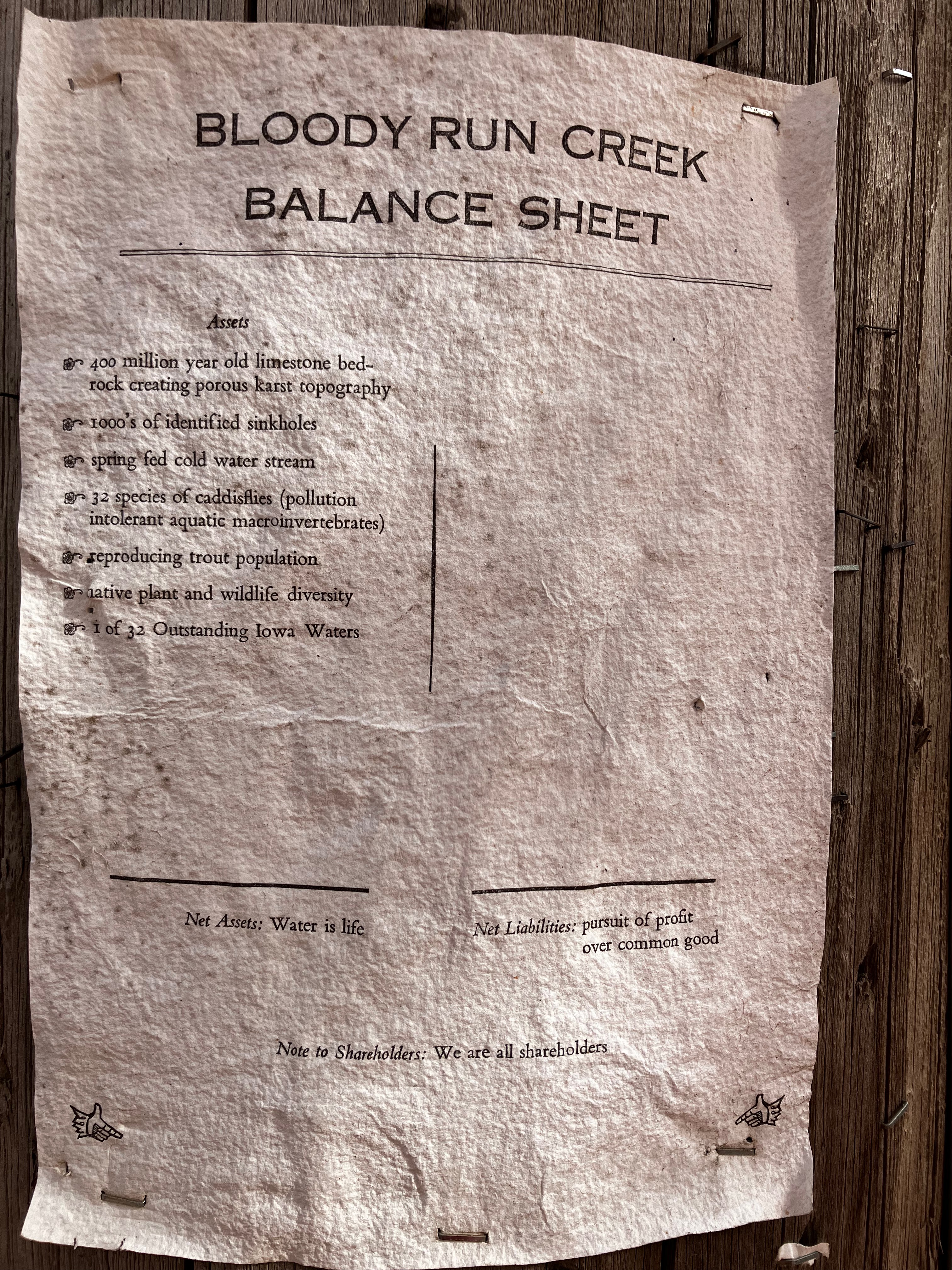
This was the first “published” piece of Tumble Bug Press in October of 2021. Bloody Run is a cold water spring fed trout stream in northeast Iowa near McGregor. True to Iowa’s legacy of being the lapdog of the Farm Bureau, Iowa’s Department of Natural Resources (DNR) is considering allowing a confined animal feeding operation in the very karst topography that drains into the headwaters of Bloody Run Creek. The Sierra Club of Iowa is suing Iowa’s DNR for accepting faulty data in its decision process. Please read more and support https://savebloodyrun.org/ .

Artistically, the paper is handmade hemp/flax and weathered 365 days posted on the telephone pole near our local neighborhood nature trail.

After freezing rains, sub zero temperatures, a blizzard, spring rains, summer sun, and eternal wind, the 8×10 inch hand set and printed on a Vandercook 15 broadside was intact and removed from the pole one year after its posting. The only real change in the broadside over time was the eventual fading of the red ink, or the “red” side of the balance sheet, the liabilities. If only it could be that easy in life to let our liabilities fade away and disappear. So long Supreme Beef!

Support your local food rescue-distribution organization!

This weathered post (Let’s Build Resiliency for the local food rescue-distribution group called Table to Table) was not printed by Tumblebug Press but I thought it’s appearance and message fits with Tumblebug’s philosophy. Support your local food rescue-distribution organization!
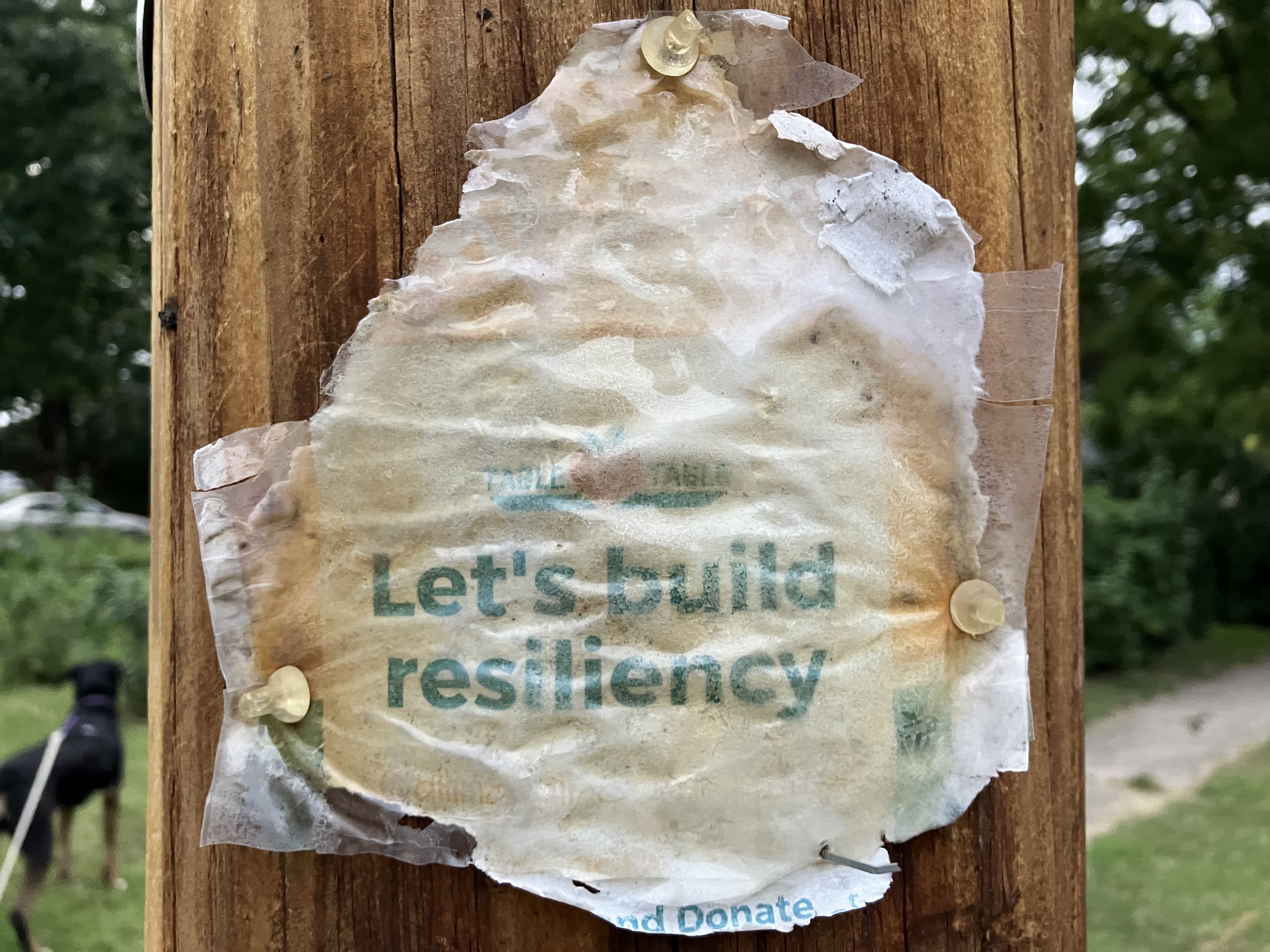
Photo by Tumblebug, 2022
Posted in Uncategorized | Leave a comment

Dung Beetles Defeat Face Flies AND Horn Flies In Ultimate Throwdown!!

More introductions of non-native dung beetles however.

Posted in Uncategorized | Leave a comment

From whence we came…

Screen Shot 2020-09-01 at 4.33.29 PMIt’s been a long time my friends. So long I don’t recognize a thing. But I’m glad to hear my tumble bug friends are still making the press. It’s sh*t news! Roll on friends.
Screen Shot 2020-09-01 at 4.34.37 PM.png


https://local12.com/news/nation-world/great-smoky-mountain-park-rangers-release-rolling-poop-video-08-27-2019-185832527

Posted in Uncategorized | Leave a comment

New IPR story on Dung Beetles

OLYMPUS DIGITAL CAMERA

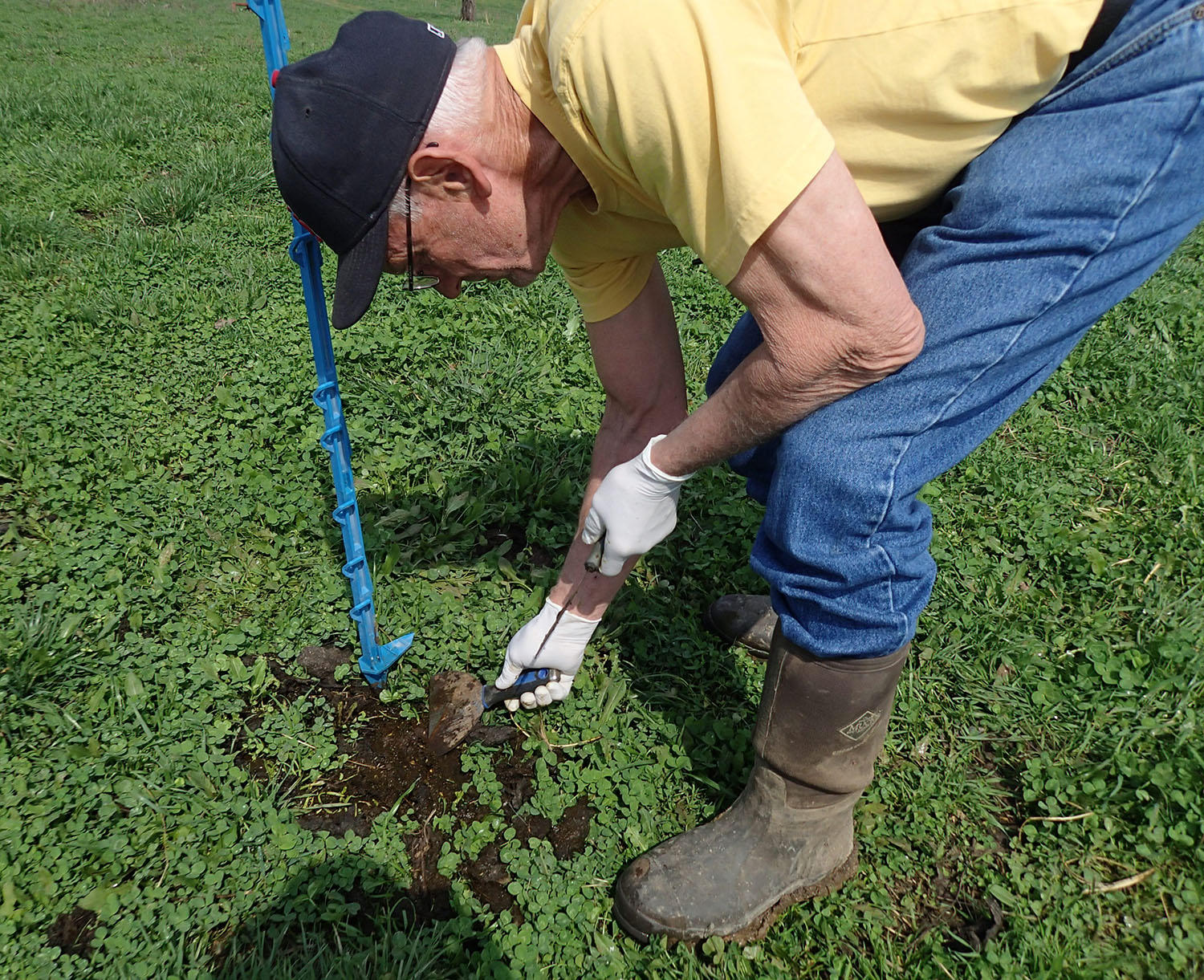
Farmer Ralph Voss digs through a fresh cow pie on his farm in central Missouri, looking for dung beetles. Photo by Jacob Grace for Harvest Public Media

http://iowapublicradio.org/post/lots-dung-midwest-farmers-look-dung-beetles-help

Posted in Uncategorized | Leave a comment

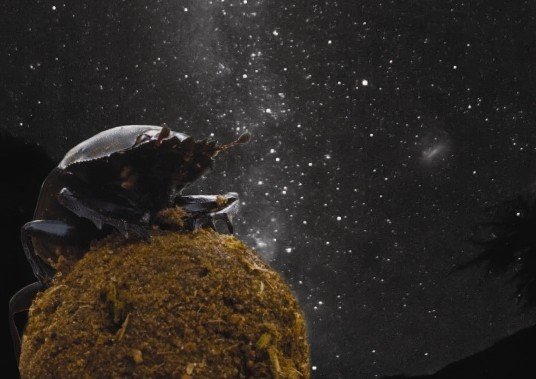
Researchers find dung beetles navigate by the Milky Way!

????????????????????????????????????????????????????????????????????????????????????????????????????????????????????????????????????????????????????????????????????????????????????????????????????????????????????????????????????????????????????????????????????????????????????????????????????????????????????????????????????????????????????????????????????????????

In some recent (published January, 2013, in the online journal Current Biology):

http://news.sciencemag.org/2013/01/dung-beetles-navigate-milky-way

That link seems to be dead but researchers Eric Warrant and Marie Dacke have published interesting findings:

https://www.annualreviews.org/doi/abs/10.1146/annurev-ento-042020-102149

Posted in Uncategorized | Leave a comment

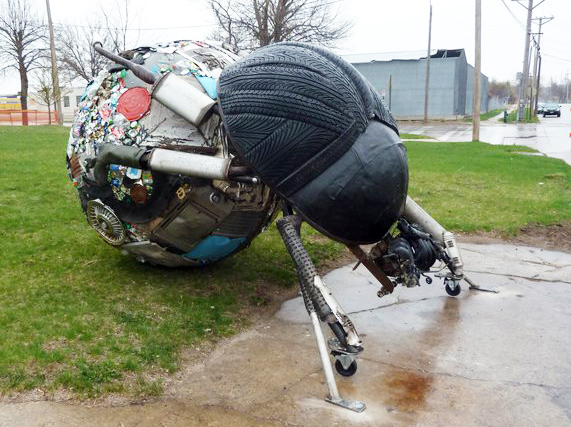
http://inhabitat.com/students-collaborate-to-create-giant-kinetic-dung-beetle-from-scrap-metal-and-salvaged-tires-in-iowa/

Students-Collaborate-to-Create-Giant-Kinetic-Dung-Beetle-from-Scrap-Metal-and-Salvaged-Tires-in-Iowahttp://inhabitat.com/students-collaborate-to-create-giant-kinetic-dung-beetle-from-scrap-metal-and-salvaged-tires-in-iowa/

Homage to recyclers everywhere. Save the boreal forest: use recycled toilet paper!

Posted in Uncategorized | Tagged | 2 Comments

We’ll soon be joining our tumble bug friends at the New Zealand customs queue.

Fears new beetles will spread diseases

By Andrew Stone

5:30 AM Saturday Mar 9, 2013
Auckland’s top public health doctor wants big insect project delayed
The rhinoceros dung beetle, one of the 11 species coming to NZ. Photo / Gail Hampshire

Expand
The rhinoceros dung beetle, one of the 11 species coming to NZ. Photo / Gail Hampshire

The planned release of vast numbers of imported dung beetles could spread nasty gut diseases, Auckland’s top public health doctor has warned.

Dr Denise Barnfather made her views known in confidential advice sent last year to Landcare, a Government agency involved in a $750,000 project to release 11 exotic species of dung beetles.

Approval to import and release the insects was granted without conditions in a little-noticed decision by the Environmental Risk Management Authority in February 2011.

The group behind the project plans releases later this year, with the beetles sent to farms to eat cow dung.

Senior scientists have questioned whether enough is known about the possible risks to human and animal health. Diseases the insects could carry include E coli, salmonella, campylobacter and giardia.

Dr Barnfather, medical officer of health with the Regional Public Health Service, said the evidence was “sufficient to raise concern exotic dung beetles may provide additional vectors for human exposure to significant gastro-intestinal diseases.”

Potential exposure from beetles contaminating water supplies in homes which collected rain in tanks, or among children eating dead beetles or by handling insects carrying pathogens had not been adequately researched, Dr Barnfather cautioned.

She said the insects could travel long distances, carry infective doses of disease, be attracted at night to light and be close to country towns.

Her advice concluded: “Until the significance of these potential human exposures to pathogens harboured by dung beetles are adequately researched and understood, public health recommends that a precautionary approach is taken and that exotic dung beetles are not introduced into New Zealand.”

The Ministry of Health and Landcare referred inquiries to the Environmental Protection Authority, the successor to ERMA.

Its principal scientist Dr Geoff Ridley said: “The Ministry of Health was notified of the application and call for submissions, but did not make a submission.

“Rigorous science supports the expert panel’s decision to allow the release of the exotic beetles.

“It is not unusual for different experts to come to different conclusions about decisions on the release of new plants and animals, however the application went through a robust process, and the EPA stands by the decision.”

Auckland University’s dean of science, Professor Grant Guilford, a former vet, believes not enough research has been done to justify releasing the beetles.

He says New Zealand’s interests are best served by waiting until all doubts have been resolved.

By Andrew Stone

Posted in Uncategorized | Leave a comment

Be a Tumblebug Friend

Bugs are your buddies too!

http://www.healingseekers.com/bugs-are-my-buddies/

or see Rick Miller’s work at:

http://www.downeastbugs.com/About_the_Photographer.html

Posted in Uncategorized | Leave a comment

A trip to the museum.

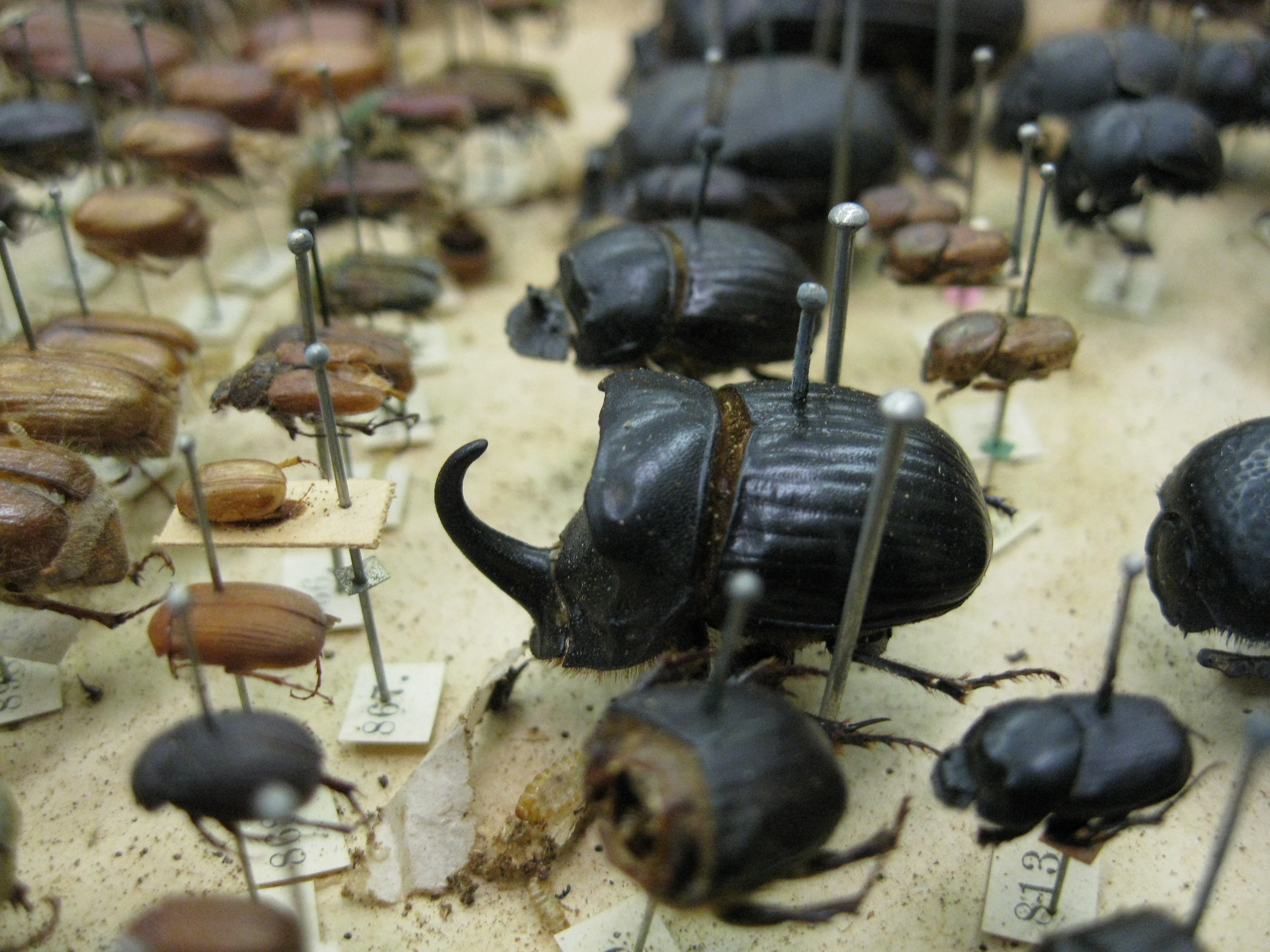
Various field specimens of Scarabaeidae from unknown locations, collected in the early 1900's.

I recently visited the curator’s office at the nearby Museum of Natural History and had an up close visit with several long deceased dung beetles. Dung Beetles are members of the Scarabaeoidea family. They are found throughout the world and were especially noted by the Egyptians who compared the habits of the dung beetle (rolling a ball of scat and soil particles in to their burrow to nuture a mass of developing larvae) to the sun god Khepri rolling the sun across the sky. Here in Iowa there have been many species identified mostly in sandy loess prairie habitats.

In Wisconsin there are  recorded around 178 species of Scarabaeoidea, which includes approx. 132 species of what we usually call dung beetles. Wisconsin has several of the dung beetles that are “rollers”, including Canthon (3 in WI), Melanocanthon (1 in WI).  All of these species like to have sandy soils, and they are most common in our sandy central counties, or along the WI river where we get sandy soils.

Kerry Katovich at the University of Wisconsin-Whitewater says, “They can be very common at some sites, and I have seen on a nice sunny day 30-50 rolling dung balls across sandy roads.  I do not think they would be uncommon in Iowa, but I think you need to go to the right location, sandy, also it should be open, and sunny for them to be active.”

These composters are essential  to the development of soil and the health of the land. Could the fact that much of our industrial farmed topsoil, stripped of the entire humus rich A horizon, have anything to do the loss of this important soil builder? As we pump  liquid Nitrogen, fertilizers and herbicides in to the less fertile B and C horizons could we maybe, just maybe take a few years to put our shoulder to earth rebuild topsoil. Can we sacrifice a few million acres from the corporate farming industry to plant prairie?

Posted in Uncategorized | Tagged | 1 Comment